
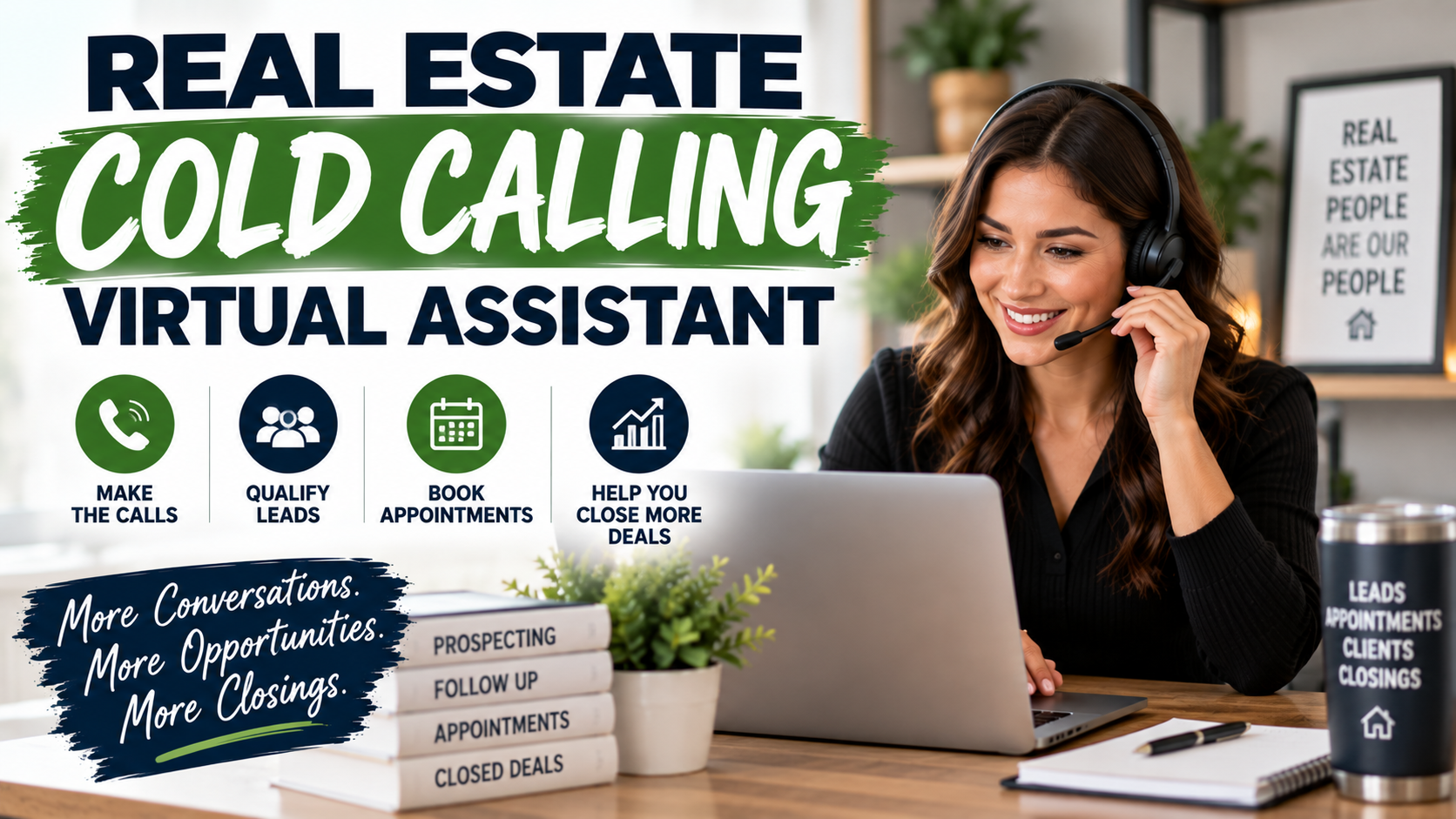
A real estate cold calling virtual assistant can put hours of prospecting on your calendar every day without you ever picking up the phone. For agents who know outbound calling works but hate doing it, or simply cannot find the time, it is one of the most direct ways to create new listing conversations.
But cold calling is also the VA role most likely to go wrong. Bad lists, weak scripts, and ignored compliance rules can waste money and create real legal risk. This guide covers who to call, what to say, how to stay compliant, and what results you should realistically expect.
Table of Contents
What a Real Estate Cold Calling Virtual Assistant Does
A real estate cold calling virtual assistant works outbound lists to find homeowners who might sell or buy in the near future. Unlike an inside sales agent who follows up on inbound leads, a cold caller starts conversations with people who have never contacted you. Their day typically includes:
- Dialing prospecting lists through a compliant dialer
- Running approved scripts and handling common objections
- Qualifying interest, timeline, and motivation
- Booking listing appointments or warm callbacks for you
- Logging every outcome in your CRM and adding follow-up tasks
If most of your leads are inbound, a different role may fit better. Compare this with our guide to the real estate virtual ISA.
The Best Lists for Outbound Prospecting
- Expired listings: Owners who wanted to sell but did not. Motivated, but heavily called.
- FSBOs: Sellers trying it alone who often need help once reality sets in.
- Circle prospecting: Neighbors around a new listing or recent sale.
- Your own database: Past clients, sphere, and old leads. The warmest calls you can make.
- Absentee owners and long-term owners: Good for longer-term listing pipelines.
Cold Calling Scripts That Sound Human
Good scripts for a real estate cold calling virtual assistant are short, respectful, and focused on one question. Here is a simple circle prospecting opener your VA can adapt:
“Hi, this is Sarah calling on behalf of [Agent Name] with [Brokerage]. We just listed a home on [Street] and wanted to let neighbors know before the open house this weekend. Out of curiosity, have you thought about what your home might be worth in today’s market?”
Build a matching script for each list type, and give your VA written answers to the five objections they will hear most: not interested, already have an agent, just looking, how did you get my number, and call me later. Always identify who you are and who you represent at the start of the call.
Do Not Call Compliance: Non-Negotiable Rules
Compliance is the part too many agents skip when they hire a real estate cold calling virtual assistant. Before your VA dials a single number, put these guardrails in place and review them with your broker:
- Scrub every list against the National Do Not Call Registry. The FTC’s rules require telemarketers to use a version of the registry that is no more than 31 days old.
- Maintain an internal do-not-call list and honor every request to stop calling immediately.
- Call only during permitted hours, generally between 8 a.m. and 9 p.m. in the recipient’s local time.
- Avoid autodialed or prerecorded calls and texts to cell phones without proper consent, as restricted under the FCC’s telemarketing rules.
- Check your state’s rules. Many states have their own do-not-call lists and stricter calling requirements.
The FTC’s Telemarketing Sales Rule guide is the best starting point. This article is not legal advice, so confirm your process with your broker or an attorney.
Realistic Results From a Cold Calling VA
Cold calling is a numbers game, and results build over time rather than in week one. Most calls go unanswered, most conversations are short, and most interested homeowners are months away from selling. What matters is the trend:
- Weeks 1 to 4: Script refinement, list testing, and a handful of warm conversations.
- Months 2 to 3: Consistent appointments and a growing pipeline of 3-to-12-month prospects.
- Months 4 and beyond: Listings start closing from conversations that began months earlier.
Have your real estate cold calling virtual assistant track dials, contacts, conversations, appointments set, and appointments kept every week. If contacts are high but appointments are low, the script or the list needs work, not the caller.
How to Hire and Launch Your Cold Caller
- Screen for clear communication, resilience, and prior outbound experience.
- Have finalists do a recorded role-play using your script.
- Set up your dialer, CRM access, calendar booking, and compliance scrubbing before day one.
- Listen to call recordings daily for the first two weeks and coach quickly.
- Pair outbound calling with a strong real estate lead follow up system so interested prospects never go cold.
For the interview stage, use our 10 questions to ask before hiring a virtual assistant, then follow the 30-day onboarding playbook.
The Bottom Line
A real estate cold calling virtual assistant can turn prospecting from something you dread into a steady source of listing appointments, as long as you give them the right lists, human scripts, and airtight compliance. If you want help deciding whether outbound calling fits your business and building the system around it, book a free game plan call.
Recent Virtual Assistant Articles
- The Perfectionist Trap: Why “I’ll Just Do It Myself” Is Costing Real Estate Agents Thousands
- The Founder Burnout Data Nobody’s Talking About: Why Small Business Owners Wait Too Long to Delegate
- How Real Estate Agents Should Spend the Fall Slow Season Building Systems for a Bigger Spring 2027
- The Complete Guide to Hiring a Virtual Assistant for Your Business
Watch The VA Playbook Webinar On Demand Here!
The Leverage Assist Company is a virtual assistant placement firm helping real estate agents and small business owners delegate smarter, scale faster, and reclaim their time. Learn more at leverageassist.co.